Improvisers/SP
The Artist
This profile speaks to you as if you are an ISFP. If you have not taken the test yet, your own report adds your exact scores, your Mindprint and your compass region.
- Seal
- 彩sai, color
- Share of people
- 6.7%1
- About
- 1 in 15
- Family
- Improvisers
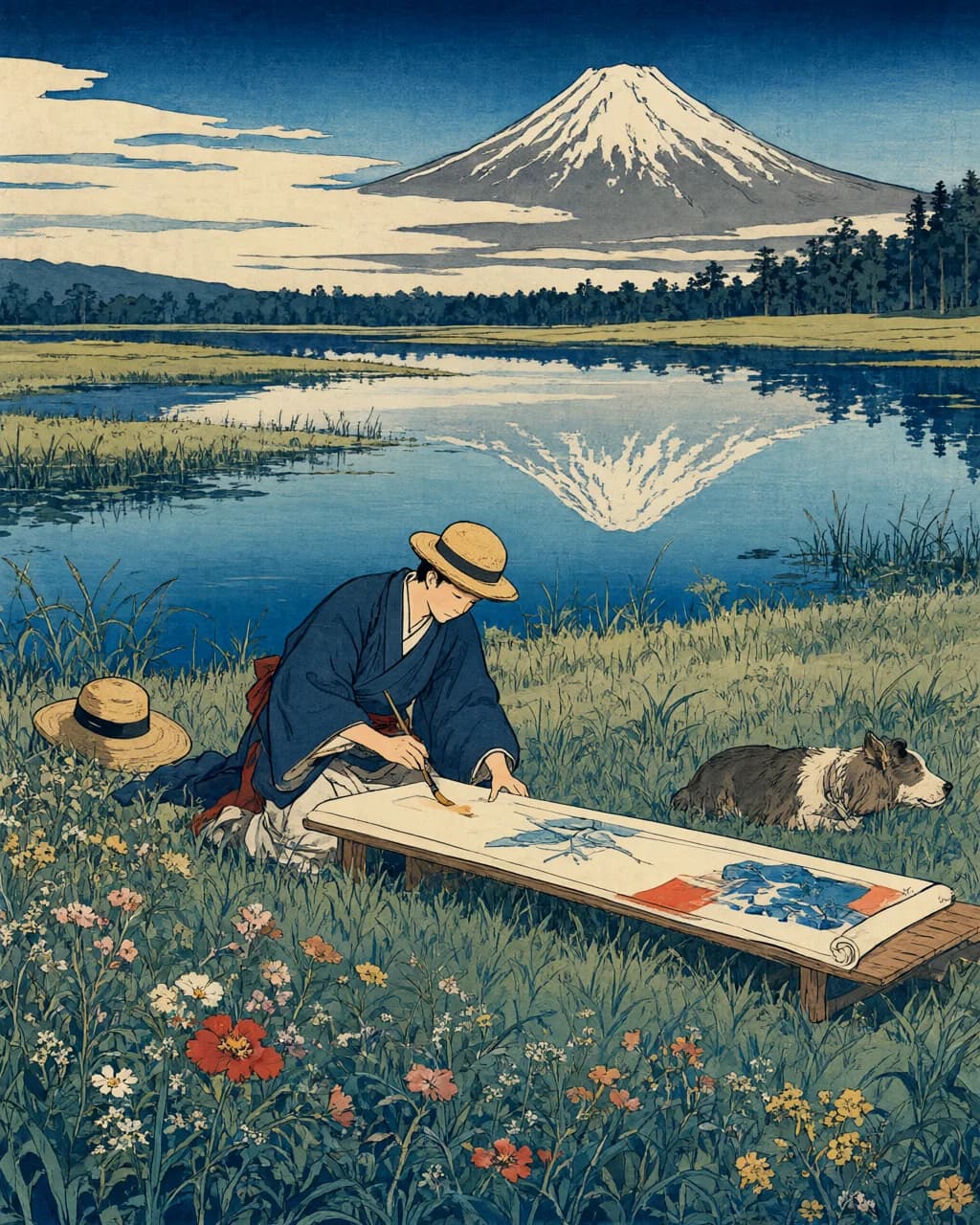
How Artists see the world
- Gentle
- Sensitive
- Artistic
- Spontaneous
- Loyal
- Private
You are guided by quiet convictions and a keen eye for what is beautiful, fitting and kind. You tend to express what you believe in practice: in what you make, how you treat people and what you refuse to do.
- LeadFi Conviction
You tend to know almost at once whether a person, a choice or a place sits right with you, the way you know a wrong note when you hear it. That reaction comes from your Lead function, Introverted Feeling (Conviction). Its standards are deeply personal, and you rarely announce them or press them on anyone. You let others live by their own lights, and you hope they will extend you the same courtesy. But once something crosses one of your lines, you are very hard to move. What can look like easy agreement is often careful, private weighing.
- SupportSe Presence
Extraverted Sensing (Presence), your Support function, gives those values a tangible form. You pick up texture, color, sound and mood: the light in a room, the tension in someone's shoulders, the one ingredient a dish is missing. What you value shows in what you do: a well-chosen gift, a meal for someone who is struggling, or simply turning up when it counts. People often find you gentle, easygoing and good company, with a playful streak that appears once you feel at ease. Underneath, you are firmer than you look.
- Relief and EdgeNi ForesightTe Efficiency
As an Artist, you are often pulled between two goods: living fully by your values today and building the structure that protects them tomorrow. Your Relief function, Introverted Intuition (Foresight), brings slow-forming insights about people and about where your life is heading, often as an image or a sense of meaning rather than a plan. Your Edge function, Extraverted Thinking (Efficiency), speaks the language of deadlines, budgets, hard bargaining and blunt critique, and it rarely feels like home. Growth can mean borrowing that structure on your own terms: a simple plan, a clear no, a firm ask for what your work is worth.
Strengths
Attentive, practical care
You often notice what someone needs before they say it, and you respond with something concrete: a blanket, a cup of tea, a slow walk on a hard day. Your care tends to fit the person exactly, so it stays with them.
Eye for what fits
You have a strong feel for proportion, color, texture and timing. Whether you are arranging a shelf, framing a photo, choosing an outfit or reworking a garden bed, your small adjustments can make the whole thing feel right.
Quiet integrity
Your values show up in decisions more than in debates. You may refuse a shortcut that would cheat a customer, step away from a group or stop supporting a business that clashes with what you believe, usually without making a speech about it.
Patient, hands-on skill
When a skill matters to you, you practice it with patience others may not expect: a recipe refined over years, an instrument, the steady touch that calms a nervous animal. The skill lives in your hands and senses more than in any manual.
Present and adaptable
You meet situations as they are rather than as they were planned, and you adapt gracefully when things shift late. You also notice small pleasures others walk past, which can make an ordinary afternoon with you feel unhurried.
Blind spots
Silent, then suddenly gone
Because you dislike confrontation and give people room, you may stay quiet about a problem for months. When a value is finally crossed, you may step back from the person or the job altogether, and your exit can feel abrupt to everyone else.
Keeping good work hidden
What you create feels personal, so you may hold it back until it is perfect, or drop it after one harsh comment. As a result, your best work can stay unseen by people who would value it.
Surprised by the future
Your ease with the present can make long-term planning, paperwork and money feel like someone else's problem. Deadlines, renewals and bills may arrive as surprises even though you knew about them all along.
Underselling yourself
You tend to downplay your own skill and put other people's needs ahead of yours. Over time you may accept less pay, credit or say than you deserve, then feel resentful about a deal you never pushed back on.
How your mind works
In Jungian type theory, ISFP leads with Introverted Feeling (Conviction) and balances it with Extraverted Sensing (Presence).
Lead: Conviction (your home base)
Introverted Feeling measures everything against an inner compass of values. It asks “does this feel right to me?” and is hard to argue out of its answer. People who lead with it value authenticity, empathize deeply with individuals and keep much of their emotional life private. It is the process behind integrity, loyalty to a cause and the courage to stand apart.
Support: Presence (your balancing partner)
Extraverted Sensing points attention fully outward at the present moment: colors, textures, movement, openings and risks as they happen. People who lead with it notice what just changed in a room, react quickly and physically, and learn best by doing. It is the process behind sharp reflexes, a strong aesthetic eye and the knack of seizing a moment before it passes.
Relief: Foresight (your playground)
Introverted Intuition works below the surface, folding many observations into a single insight or vision. People who lead with it often know where a situation is going before they can explain why, and they think in implications, symbols and long arcs. It is the process behind strategic vision, sudden clarity and a feel for what something really means.
Edge: Efficiency (your growth edge)
Extraverted Thinking applies logic to the outer world. It sets goals, defines steps, measures progress and cuts what does not work. People who lead with it make decisions readily, give clear instructions and prefer criteria that anyone can check. It is the process behind effective management, systems that scale and the confidence to make the call.
- FiLeadConviction · Introverted Feeling
- SeSupportPresence · Extraverted Sensing
- NiReliefForesight · Introverted Intuition
- TeEdgeEfficiency · Extraverted Thinking
At work
Work suits you best when it matters to you personally and the results are things you can see, touch or hear. You prefer to set your own pace and adjust as you go, and you often bring a care for detail that others notice only when it is missing. Artists can be tireless for a person or cause they believe in, and quietly absent from work that feels hollow. Gentle feedback and real autonomy get much more from you than pressure does.
Fields people of this type often enjoy
- Graphic design
- Veterinary care
- Nursing
- Horticulture
- Culinary arts
- Physical therapy
- Photography
- Woodworking
You do your best work when
- The work lines up with something you believe in
- You can set your own pace and methods
- Results are tangible: something made, grown, mended or helped
- Colleagues are kind, straightforward and low on ego
What drains you
- Harsh public criticism or competitive point-scoring
- Rigid schedules that leave no room to adjust
- Work that clashes with your values, however well paid
- Long stretches of abstract planning with nothing to show
Type describes preferences, not abilities. People of every type succeed in every field.
In relationships
You show love in small, exact ways: you remember the song someone mentioned once, cook the dish they grew up with, or sit beside them without trying to fix anything. You are slow to open up and choose your circle carefully, but those you let in tend to stay for good. You need people who respect your privacy and your pace, and who do not mistake your gentleness for having no opinions.
What you need from people close to you
- Unscheduled time to yourself, with no questions asked
- Feedback given gently and in private
- Acceptance of your tastes, pace and choices
- Care shown in actions as well as words
As a partner
Romance, for you, lives in small physical gestures: a hand on the back, a note in a coat pocket, a favorite snack restocked before it runs out. You want room for two separate inner lives, with no pressure to perform feelings on cue. Because conflict costs you a lot, grievances can go unspoken until they grow. Raising them while they are small protects the closeness you value.
As a friend
Your friendships are usually few, easygoing and long-lasting. Big gatherings may not see much of you, but you turn up for what matters: the late-night call, the moving day, the bad week. You accept friends as they are, and people often tell you things they have not told anyone else.
Talking with an Artist
Share these with the people around you.
- Give feedback privately and gently, and start with what is working.
- Allow pauses; finding the right words for a feeling can take them a while.
- Thank them for specific things they did rather than offering general praise.
- Invite their preference directly; a soft tone can hide a firm opinion.
Under stress
- 1. StrainFi
Your Lead, Conviction, works overtime: more of your usual style, applied less flexibly.
- 2. GripTe
If pressure keeps building, your Edge, Efficiency, can take over in clumsy, out-of-character ways.
- 3. Recovery
Rest and the ways back listed here help you return to your usual balance.
Strain first turns you inward: you take things more personally, withdraw from all but your closest person and say less than you feel. Under heavier pressure, your Edge function, Extraverted Thinking (Efficiency), can come out swinging. You may turn harshly critical of yourself and others, listing everyone's failures in cutting terms, or throw yourself into a frantic burst of organizing. Some Artists make an abrupt decision, such as quitting, just to feel in control again.
Common triggers
- Being judged by people who barely know you
- Pressure to do something that feels wrong
- Deadlines that leave no time to feel things out
- Coldness or tension among people you love
Ways back to balance
- Find a quiet, beautiful place and stay as long as you like
- Make something with your hands without judging how it turns out
- Put the hurt on paper before deciding anything drastic
- Let someone who knows you well simply listen
Room to grow
Small, specific practices that tend to help people of this type most.
Speak up sooner
Set yourself a short limit, such as forty-eight hours, for raising anything that bothers you, using one plain sentence: 'When this happens, I feel this, and I would like that.' Early honesty prevents the silent withdrawal that people around you find so hard to read.
Plan in small doses
Pick one area where the future keeps catching you off guard, such as money, a deadline or a long project, and give it a simple written plan. Your Edge function, Extraverted Thinking (Efficiency), develops best through practical structure you choose yourself.
Keep the useful part
When feedback hurts, note the one useful point in it before you react. Treat it as a comment on the task, not a ruling on you, and decide later, once the sting has passed, what to keep.
Ask for what you're worth
Before a review, a negotiation or a shared decision, list what you have contributed and what you want, then state it plainly. Asking for fair pay, credit or a say is not selfish, and it spares you resentment later.
Common misconceptions
MYTHArtists all make art for a living
Your aesthetic sense shows up in everyday life: how you cook, dress, garden, care for animals or arrange a room. Artists work in every field, from nursing to accounting to farming, and tend to bring the same eye for what fits to all of it.
MYTHArtists are pushovers
You are flexible about small things and immovable about the few that matter. Anyone who reads your gentleness as weakness tends to learn otherwise the moment they push you to cross one of your own lines.
MYTHArtists decide on a whim
Your decisions can look sudden because they come from the gut, but that gut is drawing on values you have tested for years. The reasoning is real; it is simply private, and you may not put it into words unless someone asks.
How common Artists are
How often you will meet ISFPs, and how common each of their four letters is. Common or rare, no type is better than another.
6.7%
of people are Artists (ISFP): about 1 in 15, making it the 6th most common type of sixteen.
Their four letters among everyone
- E Extraverted 38.8%61.2% Introverted I
- N Intuitive 31.5%68.5% Observant S
- T Thinking 52.1%47.9% Feeling F
- J Judging 52.5%47.5% Perceiving P
Their family, the Improvisers
- Keepers SJ42.4%
- Improvisers SP26.1%
- Seekers NF19.2%
- Strategists NT12.3%
All sixteen types, most common first
- ISTJAnchor17.6%
- ISFJSteward10.6%
- ISTPTroubleshooter9.4%
- ESTJQuartermaster8.0%
- ENFPCatalyst7.5%
- ISFPArtist6.7%
- INFPWayfarer6.4%
- ESFJHearthkeeper6.3%
- ESFPSpark5.1%
- ESTPScout4.9%
- INTPCodebreaker4.5%
- INTJCartographer3.1%
- ENTPTrailblazer3.0%
- INFJLamplighter2.9%
- ENFJTorchbearer2.3%
- ENTJCaptain1.8%
Source: MBTI Global Step I results for a US sample of 3,578 adults, matched to US census targets (Schaubhut et al., 2018). Shares differ between countries, age groups and samples.
The other Improvisers
Improvisers combine attention to concrete reality with a preference for flexibility. They read the moment, act on it, and are often at their sharpest when a situation is changing too fast for a plan.

The map of all sixteen
Where Artists sit among the other fifteen types. Neighboring cells differ by a single letter.
Tinted cells are one letter away from ISFP. Columns pair perception and decisions; rows pair energy and structure.
Source: MBTI Global Step I results for a US sample of 3,578 adults, matched to US census targets (Schaubhut et al., 2018). Shares differ between countries, age groups and samples.
Is ISFP really you?
Reading a profile is a good start. The test shows where you actually land on each scale, including the close calls a four-letter code hides.
1 Share of a US sample of 3,578 adults who took the MBTI Global Step I assessment, recruited to match census targets (Schaubhut, Thompson, Morris and Arneson, 2018). Shares differ between countries, age groups and samples; treat them as rough guides.